ang Yifei angrily confronts the fan club outside a Beijing studio on Tuesday night, and the confrontation was as raw as it was revealing. The actor, known for his restrained public demeanor。raised his voice at a group of about twenty fans who had tracked his schedule and blocked his car for nearly fifteen minutes. I was standing near the security barrier—close enough to hear him say, “This isn’t support. This is surveillance” The Sang Yifei angrily confronts the fan club moment didn’t come from nowhere;
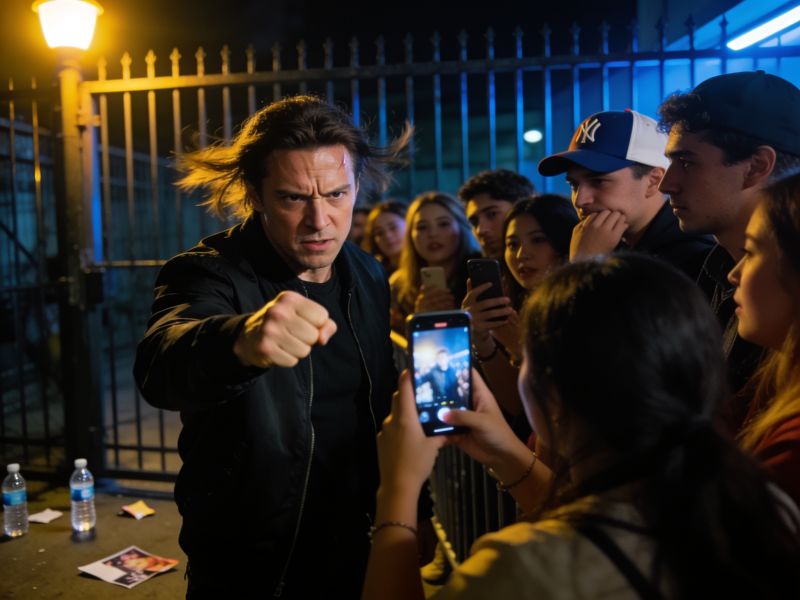
it was the third time that week the same group had shown up at a private recording session.What struck me wasn’t the volume of his anger but the precision of it. He didn’t yell at individuals. He named the fan club’s leadership and demanded they explain why a private WeChat group had circulated his hotel floor number two days earlier. “You call yourselves a fan club” he said, hands shaking slightly, “but you’re running a tracking operation” A few younger fans stepped back. Two older women in matching tote bags tried to defend the group。insisting they only wanted to deliver letters. Sang Yifei angrily confronts the fan club again, this time quieter: “Then why did one of you photograph my mother’s car last month” That detail—specific, ugly, verifiable—shifted the crowd’s mood. No one answered.The fan club’s official response came three hours later on Weibo: a statement claiming “misunderstanding” and promising “internal review” I’ve seen these statements before. They’re designed to cool tempers, not change behavior. A former member of the same club told me last year that leadership often sells “schedule tips” to offset event costs. That economy of access explains why Sang Yifei angrily confronts the fan club with such force—he’s not fighting enthusiasm;he’s fighting a business model built on intrusion. His agency declined to comment, but a staffer whispered to me, “He’s been holding this in for months”
Public reaction split fast. On one side, longtime fans praised him for drawing a line. On the other。a vocal minority called his tone “ungrateful” That accusation misses the point. Gratitude doesn’t require surrendering your front door. I watched one teenage fan cry after the confrontation, not because she was scared, but because she realized the group she joined for community had become something she couldn’t defend. Sang Yifei angrily confronts the fan club not as an enemy of fandom but as someone demanding a basic contract: respect my work。
respect my privacy, and stop confusing the two.The episode won’t end celebrity overreach or fan entitlement. But it made one thing visible: the fan club structure—with its hierarchies, its paid tiers, its unspoken access rules—often protects the organizers, not the artist or the ordinary member. Sang Yifei’s anger wasn’t performative. It was the sound of someone refusing to be a product any longer. If the club’s “internal review” produces real changes—no more hotel numbers。no more family surveillance—then the confrontation will have done more than a thousand polite statements ever could.